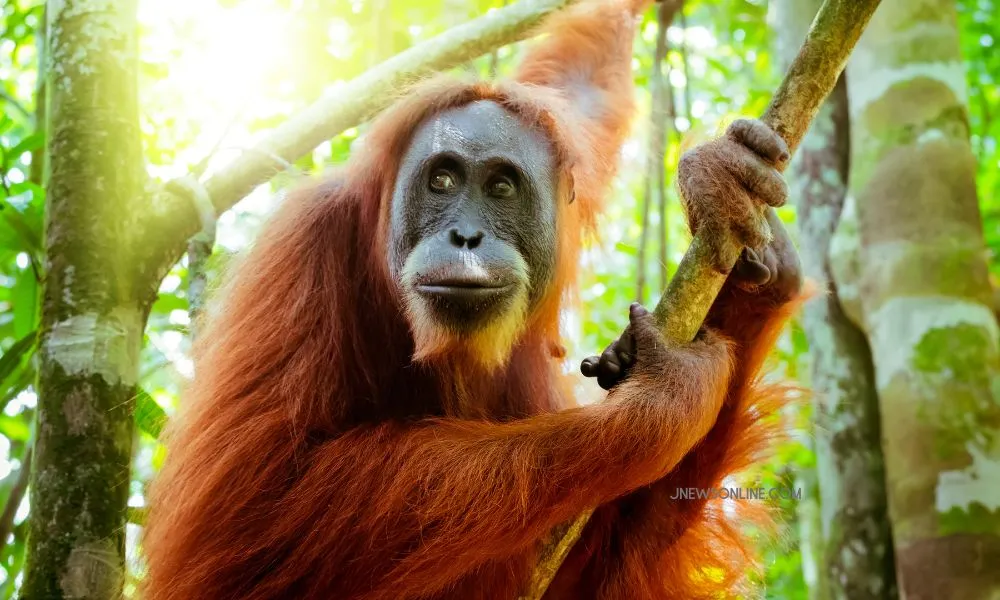
A forest is not simply a collection of trees at one point on a map. For canopy-moving animals such as orangutans, forest needs to be connected so there are routes to find food, build nests, and move between parts of a landscape. This is known as habitat connectivity: the capacity for organisms to move through habitat areas that remain linked.
A CFES article about Hutan Desa Telaga in Katingan Regency, Central Kalimantan, uses community forest management and evidence of Bornean orangutan (*Pongo pygmaeus*) presence as a context for understanding why connected living space matters in conservation.[1] For students considering Conservation Biology, Ecology, Forestry, Environmental Science, or Geography, the topic shows how wildlife data, forest condition, and community decisions can connect.
Why do animals need connected habitat?
When forest becomes divided into smaller patches, wildlife movement can be restricted. Fragmentation can separate food sources, reduce safe-route options, and make populations more isolated. Over time, that can make population management harder and increase the risk of conflict at habitat edges.
Connectivity does not always mean that an entire landscape must become one large protected area. In conservation practice, researchers and land managers may map remaining forest, rivers, riparian areas, canopy bridges, or vegetation corridors to understand possible wildlife routes. Every design needs to be based on local ecology, community rights, and field evaluation—not assumptions from a map alone.
Orangutans and the work of seed dispersal
Orangutans also matter because of their relationship with forest regeneration. Research in the Sabangau peat-swamp forest of Central Kalimantan combined digestive-physiology information with wild-orangutan movement data to model seed-dispersal patterns.[2] When orangutans eat fruit and move, seeds can be carried to other locations. This is one way vegetation can regenerate and spread through a forest landscape.
The Borneo Nature Foundation reported research that found seeds in 73% of the orangutan faecal samples studied; for four of five plant species compared, seeds that were spat out or passed through orangutans showed germination success and/or faster germination than untreated seeds.[3] Findings like these help explain why protecting orangutans and protecting forests cannot be separated.
From field stories to research questions
The Hutan Desa Telaga example shows that conservation is not only conducted by scientists in laboratories. Community forest management, field monitoring, local knowledge, and ecological protection can all form part of an effort to maintain wildlife living space.[1]
If this area interests you, research questions could include:
- How are camera traps, nest surveys, GPS, satellite imagery, or GIS used to understand habitat condition?
- How can corridor quality be measured, rather than simply the size of green areas?
- How can conservation design respect local livelihoods and rights?
- How can science communication help prevent human–wildlife conflict without blaming communities?
Study options and useful skills
Conservation Biology, Ecology, Forestry, Environmental Science, Geography, and Wildlife Management programmes can combine field ecology with data analysis, policy, and collaborative work. When comparing programmes, check whether the curriculum includes field methods, statistics, GIS or remote sensing, biodiversity monitoring, environmental policy, and community-based project opportunities.
The orangutan story does not reduce conservation to one quick solution. Protecting habitat connectivity requires long-term research, fair governance, and multi-party collaboration. But it also shows how environmental study can connect scientific knowledge with real decisions across a landscape.
RIM Education can help you compare overseas environmental and conservation study options, including entry requirements and application-document preparation. Contact RIM Education to discuss your plans.
Conservation information, species status, and local management conditions can change. Always check scientific sources, conservation institutions, and relevant authorities for current information.[1][2][3]
Sources
[1] Orangutan Kalimantan dan Peran Pengelolaan Hutan Desa Telaga — CFES
[2] An ecophysiologically informed model of seed dispersal by orangutans