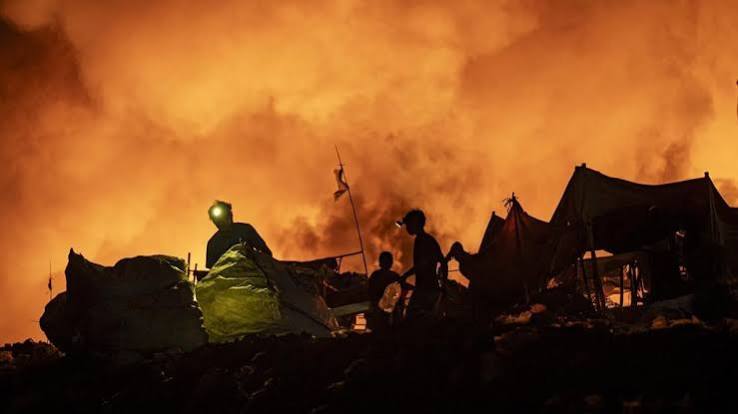
Study Environmental Engineering: From Waste Management to More Resilient Cities
The active fire reported at Jatibarang landfill in Semarang is a reminder that waste is not only a disposal issue. It also involves system design, risk control, environmental quality, and urban preparedness. At the time the report was checked, responders were using containment measures to limit the spread of the fire; operational response remains the responsibility of the authorities.[1]
For students who want to understand challenges like these through science and engineering, Environmental Engineering can be a relevant study pathway. It does not offer one instant answer to every environmental problem. Instead, it equips students to design, measure, model, and assess systems connected to water, waste, energy, materials, and the built environment.[3][4]
What do you study in Environmental Engineering?
Environmental Engineering brings engineering fundamentals together with an understanding of natural and urban systems. At The University of Queensland (UQ), sample courses in the major include Environmental Systems, Environmental System Dynamics and Modelling, Environmental Phenomena, and Engineering the Circular Economy.[3]
That mix helps students see a problem as a whole. For example, waste management does not end with collection. It can involve material characteristics, resource flows, environmental impacts, safety, regulation, facility operations, and the way measured data is translated into design decisions.
From waste issues to the circular economy
The circular economy asks us to look beyond a “take–use–dispose” model. In engineering contexts, that can involve reducing waste at the source, reusing materials, improving processes, recovering resources, and assessing a system’s impacts across its life cycle.[3]
This does not mean every graduate will work at a landfill. Environmental engineering can connect with wastewater treatment, environmental consulting, facility planning, cleaner manufacturing, process efficiency, water management, and cross-disciplinary city projects. UQ lists environmental engineer, process improvement engineer, environmental consultant, wastewater treatment engineer, and principal environmental officer among example career directions.[3]
Skills worth building at school
Start with these foundations:
- Mathematics and science: useful for understanding data, physical processes, and modelling.
- Data literacy: practise reading graphs, comparing evidence, and explaining findings clearly.
- Problem solving: get comfortable breaking a large issue into testable variables.
- Communication and collaboration: environmental solutions nearly always involve communities, regulators, operators, and technical teams.
- Curiosity about systems: notice the links between consumption, materials, water, energy, and impacts.
How to compare programmes thoughtfully
When comparing overseas programmes, look beyond the degree name. Review specialisations, core courses, laboratory or field projects, work placements, facilities, and research opportunities. At UQ, learning experiences may include lectures, tutorials, work placements, laboratory work, fieldwork, and workshops.[3] For the combined chemical and environmental engineering field, UQ also describes a focus on environmental regulation and sustainable water, energy, and waste management, with an advanced placement or research thesis.[4]
RIM Education can help you map Environmental Engineering options, check academic prerequisites, and build an overseas-study application strategy. Contact RIM Education to discuss your plans.
Important: The Jatibarang fire is a changing incident and is not a source of public-safety guidance. Follow local authorities’ official instructions for emergency information.[1][2] Programme structures, courses, placements, fees, intakes, entry requirements, and visa conditions can also change; check each university’s official programme page and your offer before making a decision.[3][4]
Sources
[1] https://news.detik.com/berita/d-8686841/tpa-jatibarang-semarang-terbakar-malam-ini-kandungan-gas-metana-tinggi/amp — TPA Jatibarang Semarang Terbakar Malam Ini, Kandungan Gas Metana Tinggi — detikNews
[2] https://diskominfo.semarangkota.go.id/berita/121-kebakaran-dalam-empat-bulan-pemkot-semarang-perkuat-kewaspadaan-hadapi-puncak-kemarau — Semarang strengthens fire preparedness — Diskominfo Kota Semarang
[3] https://study.uq.edu.au/study-options/programs/bachelor-engineering-honours-2455/environmental-engineering-envirc2455 — Environmental Engineering — Bachelor of Engineering (Honours) — The University of Queensland
[4] https://study.uq.edu.au/study-options/programs/bachelor-engineering-honours-and-master-engineering-2350/chemical-and-environmental-engineering-chenvx2350 — Chemical and Environmental Engineering — The University of Queensland