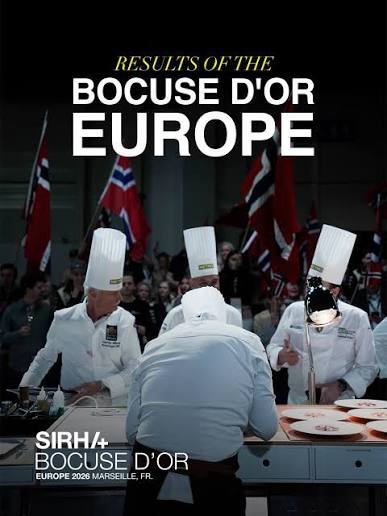
Bocuse d’Or is often mentioned in conversations about the highest level of professional culinary competition. Created by Paul Bocuse in Lyon in 1987, it puts chefs cooking live in front of an audience, cameras, and an international jury.[2] For future Culinary Arts students, it is useful not because every chef must make it a career goal, but because it makes visible the skills built through serious culinary education and practice.
The current cycle listed on the official website includes national selections in 2025, continental selections in 2026, and a Grand Final at Sirha Lyon, France, in 2027. Twenty-four teams will compete at the Grand Final.[1]
It is not only about plating
On screen, culinary competition can look like a race to produce beautiful plates. Yet Bocuse d’Or highlights technique, creativity, precision, commitment, and human values in gastronomy.[1][2] Its official values also include teamwork, respect for producers and products, making the most of knowledge, and avoiding waste.[2]
For students, those ideas translate into practical habits:
- understand core technique and food safety before experimenting;
- plan mise en place, timing, and workflow;
- develop menu ideas with clear reasoning;
- communicate calmly with a team under pressure; and
- evaluate waste, sourcing, and ingredient use responsibly.
These capabilities are relevant in professional kitchens, patisserie, food-product development, catering, restaurant operations, and parts of hospitality.
Why teamwork matters so much
The competition does not present a great chef as someone who works alone. Its official values include working as a team, keeping composure in adversity, and passing on passion to future generations.[2]
In study settings, teamwork can mean sharing stations in a practical class, briefing before service, accepting feedback from chef-instructors, and solving problems when a dish does not go as planned. A final dish matters, but an organised, communicative, and dependable process also helps build professional readiness.
From national selection to a global stage
Bocuse d’Or has a network of academies in 72 countries across five continents. These academies organise national qualifiers; top teams progress to continental selections, and 24 teams then reach the Grand Final.[3] Indonesia appears in the official Asia-Pacific network list.[3]
The structure shows how professional gastronomy connects local identity with global exchange. As a future student, you can start developing a similar perspective: understand the ingredients, flavours, and food traditions you know, then learn the techniques, service standards, and professional language needed in international settings.
Choosing a Culinary Arts programme with more direction
When comparing programmes, look beyond kitchen photographs or celebrity-chef names. Ask:
- How many practical-kitchen hours are included?
- Does the curriculum cover culinary technique, pastry, food safety, menu development, costing, and teamwork?
- How do students receive feedback and get assessed in practical classes?
- Are there work-integrated learning, internship, or industry-project opportunities—and what are the requirements?
- What English requirements, portfolio requirements if any, equipment, uniform, ingredient, and living costs should you plan for?
A competition such as Bocuse d’Or is not a job guarantee or the only measure of a chef’s success. But the standards visible there can help you understand that culinary study calls for discipline, curiosity, collaboration, and repeated practice.
RIM Education can help you compare Culinary Arts, Pastry, Hospitality, and related overseas programmes, including entry requirements and application documents. Contact RIM Education to discuss your plans.
Competition schedules, locations, criteria, and rules can change. Always check the official Bocuse d’Or and destination-institution websites for current information.[1]