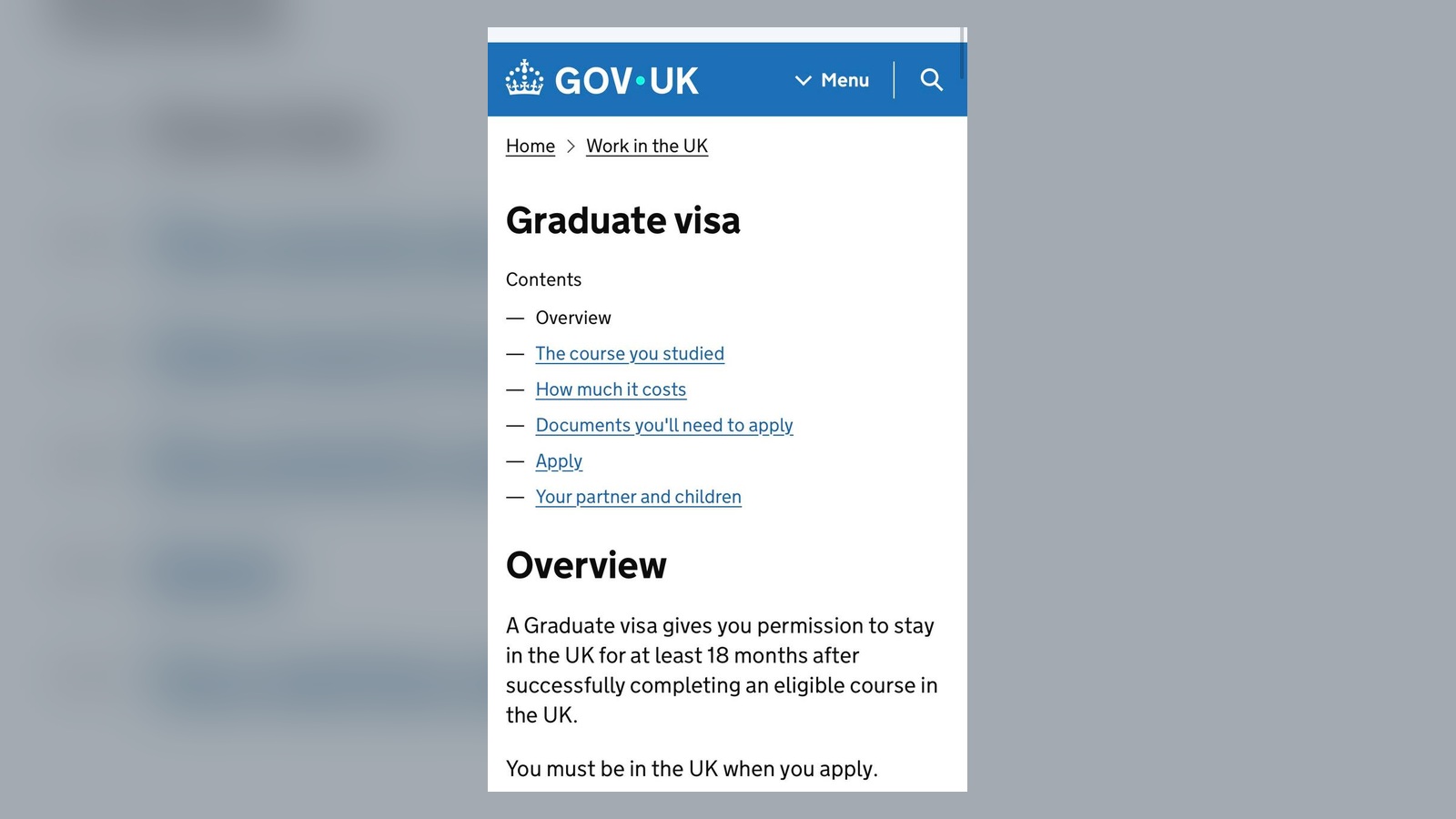
The Graduate visa allows eligible graduates to remain in the UK after completing study, working or looking for work without employer sponsorship. It is not a job guarantee, permanent residence route or automatic approval.[1][2]
The key point for prospective students is application timing: GOV.UK says the visa lasts two years for applications made on or before 31 December 2026, and 18 months for applications made on or after 1 January 2027. A PhD or other doctoral qualification receives three years.[2]
Who can apply for a Graduate visa?
In general, applicants must be in the UK, currently hold a Student visa or Tier 4 (General) student visa, have completed an eligible course, and have an education provider that has notified the Home Office of successful completion.[2]
The provider must also be a licensed sponsor with a track record of compliance. Courses that are usually eligible include a UK bachelor’s degree, master’s degree, PhD or doctorate, together with certain professional qualifications.[3]
When is the right time to apply?
The application must be made before the Student or Tier 4 visa expires. An applicant can apply after the provider has told the Home Office that the course was successfully completed; there is no need to wait for a graduation ceremony or a physical certificate.[2]
UKCISA notes that a university may not make its report to the Home Office on the day results are released. Confirm the reporting timeline with the university and do not apply on assumptions.[1]
What changes from 1 January 2027?
The main change is the duration for undergraduate and postgraduate taught graduates: applications up to 31 December 2026 receive two years, while applications from 1 January 2027 receive 18 months.[2]
The application date, not simply the graduation date, matters for this duration. Students planning their studies should account for course-completion timing, provider reporting and Student visa expiry—without assuming they will definitely be able to apply before a particular date.
What can and cannot you do?
A Graduate visa holder can work in most jobs, look for work, be self-employed, undertake voluntary work, and travel out of and back to the UK. The visa cannot be extended; a holder may be able to switch to another visa if eligible, such as the Skilled Worker visa.[2]
The route does not allow access to most public funds or work as a professional sportsperson. The exact rights on grant should still be checked against the decision and the latest GOV.UK guidance.[2]
Does every UK course meet the requirement?
Not necessarily. For courses longer than 12 months, GOV.UK says the applicant needs to have studied in the UK for at least 12 months. For courses of 12 months or less, the applicant needs to have studied in the UK for the whole course. Specific COVID-19 exceptions can apply to some cases.[3]
Before choosing a programme, check more than rankings and location: review sponsor status, course type, duration and attendance model.
Checklist before graduation
- Ask the university to confirm whether your course and sponsor status support a Graduate visa application.
- Check your Student visa expiry date and do not wait until status has expired.
- Ask when the university will report successful completion to the Home Office.
- Distinguish the Graduate visa from the Skilled Worker visa: the Graduate visa does not need employer sponsorship, but it cannot be extended.
- Check the duration that applies to your application date and read the latest GOV.UK guidance before submitting.
This is educational context, not immigration advice or a guarantee of a visa or job. For help choosing a UK programme and preparing admission documents, contact RIM Education.
Sources
[1] https://www.ukcisa.org.uk/student-advice/working/graduate-route — UKCISA: Graduate route visa
[2] https://www.gov.uk/graduate-visa — GOV.UK: Graduate visa overview
[3] https://www.gov.uk/graduate-visa/course-you-studied — GOV.UK: Graduate visa course and study requirement