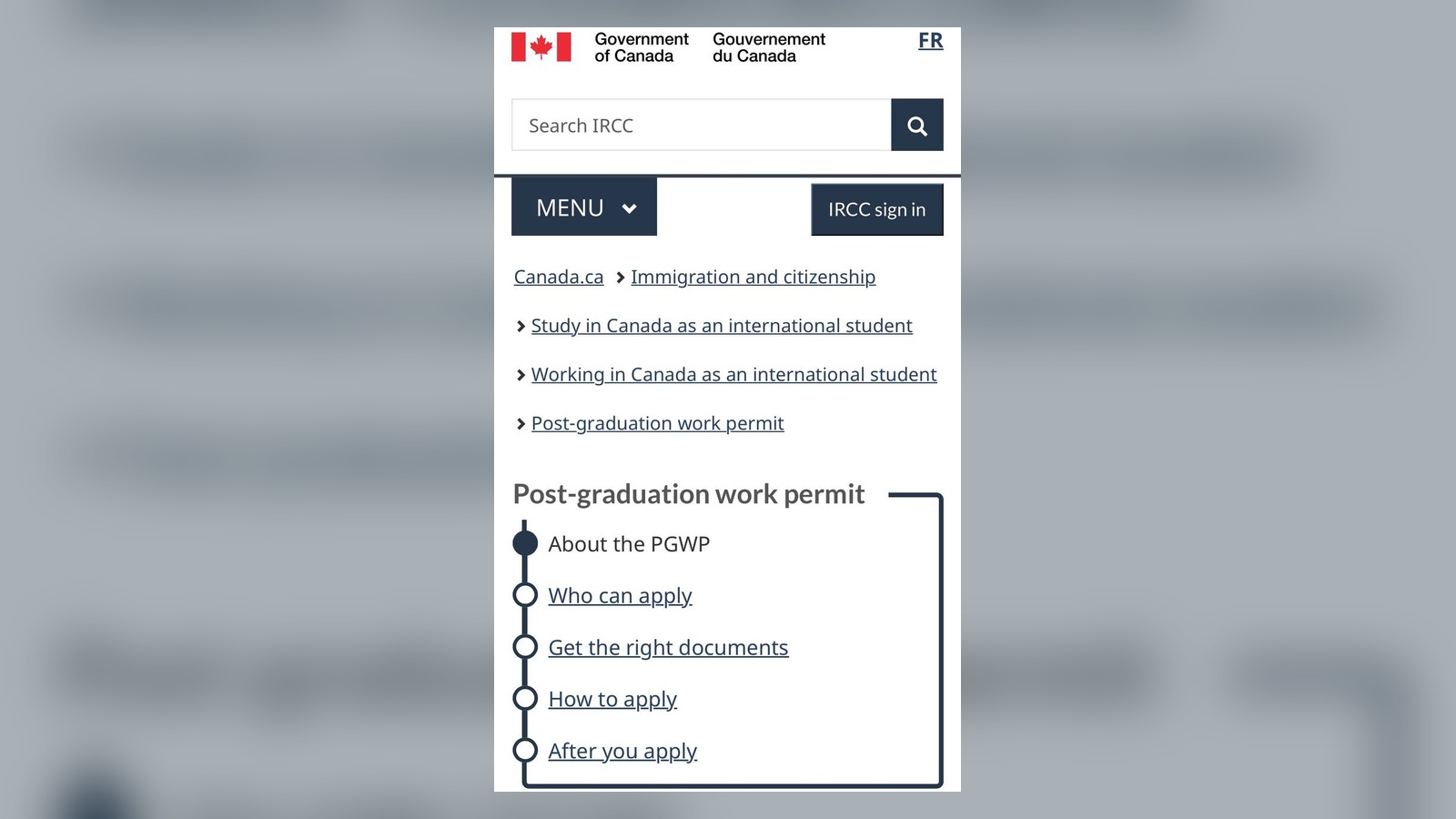
The Post-Graduation Work Permit (PGWP) is a work permit for graduates of eligible programmes and designated learning institutions (DLIs), intended to help them gain Canadian work experience after study. Graduating from a DLI alone does not automatically make someone eligible for a PGWP.[1]
A PGWP is not a job guarantee, permanent-residence pathway or guaranteed application result. Rules can change and eligibility is assessed individually, so prospective students should check the specific programme—not only the institution name—before accepting an offer.
Why is choosing a DLI not enough?
The Government of Canada says the programme at the DLI must itself be PGWP-eligible. In general, applicants must complete a programme of at least eight months (or 900 hours for Quebec programmes), maintain full-time status during each semester with limited final-semester exceptions, and meet other requirements.[2]
That means two programmes at the same institution may not have the same PGWP outcome. Ask the institution to confirm programme status, delivery model and, where relevant, the CIP code before making an enrolment decision.
When do you need to apply for a PGWP?
The general application window is up to 180 days after confirmation that you completed your programme.[2][3] If a study permit may expire before graduation documents arrive, do not allow status to lapse without checking the official options.[2]
Timing and immigration status affect the right next step. Applying late or after status has expired may create extra obligations and fees.[3]
Are there language and field-of-study requirements?
For many applicants applying from 1 November 2024, proof of English or French ability is part of the requirements. For bachelor’s, master’s and doctoral graduates, Canada lists a minimum CLB/NCLC 7 across all four language abilities; for certain college, polytechnic or non-university programmes, the listed minimum is CLB/NCLC 5.[1][2]
There is no field-of-study requirement for bachelor’s, master’s or doctoral graduates. For other programme categories and certain study-permit dates, however, an eligible field of study may be required; the list is based on a six-digit CIP code.[2][4] Do not infer this from a major title alone—verify the CIP code and the rule that applies to the study-permit application date.
How long can a PGWP be valid?
PGWP length depends on the level and length of study, as well as passport expiry, whichever comes first.[1] For eligible master’s programmes, Canada says a three-year permit may be available even if the programme was less than two years, provided it was at least eight months and all other requirements are met.[1]
For other programmes, a programme of at least eight months but less than two years may result in a permit valid for up to the study length; a programme of two years or more may result in a three-year permit.[1] These are not promised durations for every graduate.
Checklist before choosing a Canadian programme
- Check both the DLI and the PGWP status of the programme you are considering.
- Check study delivery, full-time policy and the potential PGWP impact of online study.
- Keep enrolment records, transcripts and completion letters organised.
- Understand whether your programme needs language results and an eligible field of study.
- Check the 180-day limit, study-permit status, fees and current document requirements on the latest IRCC pages before applying.
Canada also says you cannot get another PGWP if you already received one after an earlier study programme.[1] This article is educational context, not immigration advice or a permit guarantee. For help choosing a Canadian programme and preparing admission documents, contact RIM Education.
Sources
[1] https://www.canada.ca/en/immigration-refugees-citizenship/services/study-canada/work/after-graduation/about.html — Government of Canada: About the post-graduation work permit
[2] https://www.canada.ca/en/immigration-refugees-citizenship/services/study-canada/work/after-graduation/eligibility.html — Government of Canada: PGWP eligibility
[3] https://www.canada.ca/en/immigration-refugees-citizenship/services/study-canada/work/after-graduation/apply.html — Government of Canada: How to apply for a PGWP
[4] https://www.canada.ca/en/immigration-refugees-citizenship/services/study-canada/work/after-graduation/eligibility/field-of-study.html — Government of Canada: PGWP field of study requirement