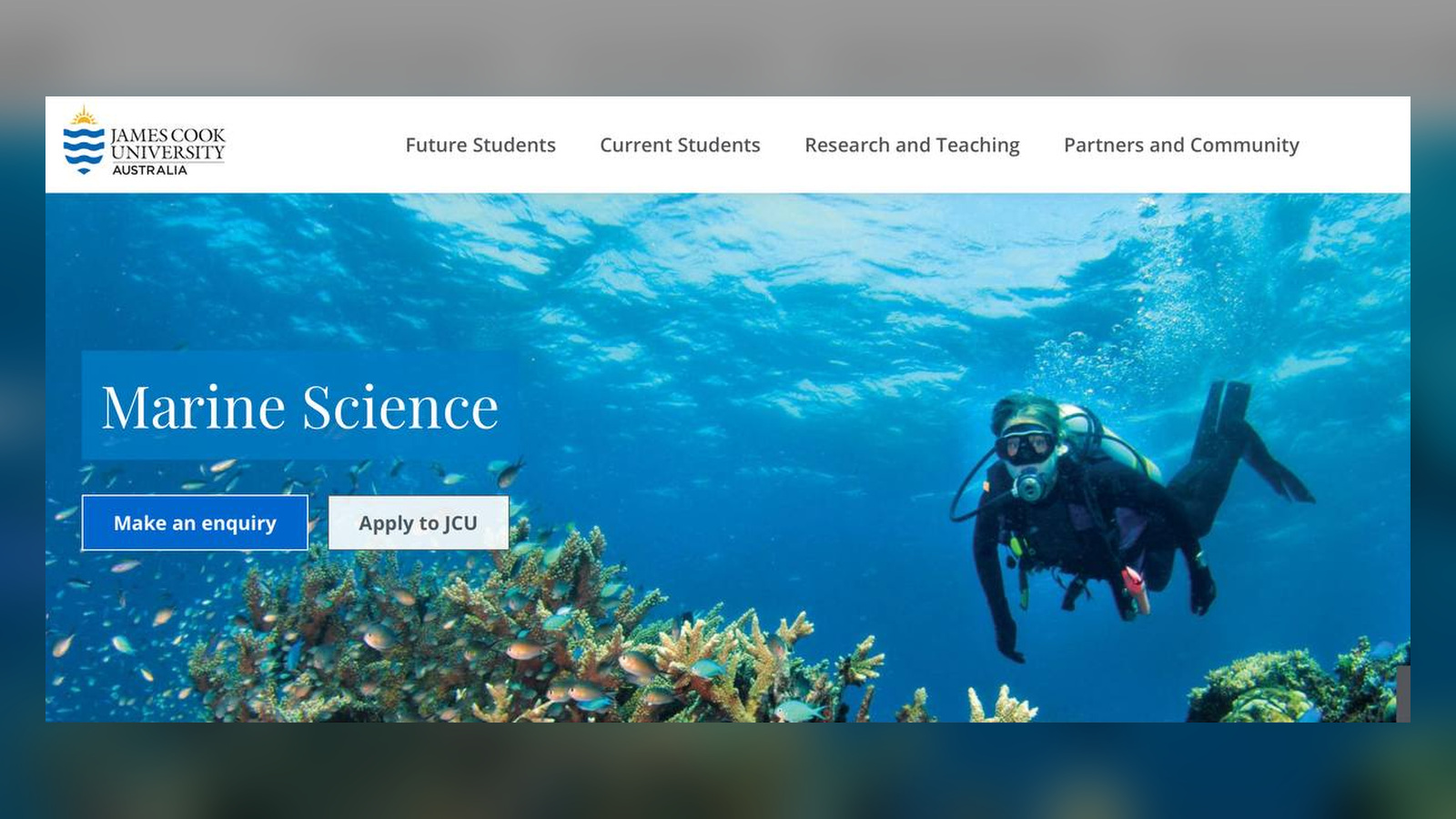
Study Marine Science at JCU: From Coral Reefs to Ocean Data
SEO metadata — English
- Title: Study Marine Science at JCU: Coral Reefs, Ocean Data and Conservation
- Slug: study-marine-science-jcu-coral-reefs-ocean-data
- Excerpt: Explore JCU’s Bachelor of Marine Science in Townsville: field learning, ocean data, WIL, international fees and questions to check before applying.
- SEO title: JCU Bachelor of Marine Science Australia | RIM Education
- SEO description: Explore JCU’s Bachelor of Marine Science in Townsville: fieldwork, ocean-data technology, WIL, fees and current requirements for international students.
Article — English
Study Marine Science at JCU: From Coral Reefs to Ocean Data
Marine Science can suit students who want to understand the ocean as both a living system and a data system: from coral reefs, seagrass and fisheries to oceanographic sensors and coastal management. At James Cook University (JCU), the Bachelor of Marine Science focuses on biological, physical and chemical sciences relevant to coastal and ocean systems, with study in Townsville, Queensland.[1][2]
For prospective Indonesian students, the key question is not only “do I like the sea?” It is also “am I ready to study science, undertake fieldwork, work with data and examine how human decisions affect ecosystems?”
What do you study in Marine Science?
JCU says its Marine Science, Marine Biology and Aquaculture study options can involve coral-reef, island, seagrass and mangrove environments in the Great Barrier Reef, as well as topics including marine-resource management and sustainable aquaculture.[1] For the Bachelor of Marine Science, JCU also identifies foundations in biological processes, ocean chemistry, coastal and marine geomorphology, and fisheries science.[2]
This means Marine Science is not only about diving or observing marine animals. Students need to build scientific foundations, plan field investigations, collect data and interpret results carefully.
How is technology used to understand the ocean?
The ocean is difficult to monitor through direct observation alone. JCU refers to seabed mapping, fish-assessment sonar, oceanographic sensors and technologies used to gather data above and below the waves.[2]
This is where Marine Science meets data and technology. Useful skills may include:
- designing research questions and sampling methods;
- reading environmental and population data;
- understanding maps, sensors and field observations;
- explaining findings clearly to technical teams and communities;
- considering uncertainty before reaching conclusions.
Technology supports observation, but it does not replace an understanding of ecological context, data limitations or complex management decisions.
How practical is the learning experience?
JCU describes learning access at the Orpheus Island Research Station, coastal and marine field settings, research vessels, aquariums and laboratories.[1][2] On the international version of the course page, JCU also states that the degree requires Work Integrated Learning (WIL) activities—such as placements, fieldwork, internships or industry-partnered projects—with a minimum of 139 WIL hours.[3]
The actual experience, location, capacity, related costs, timing and safety requirements can change. Prospective students should check the latest handbook and course information rather than assuming every form of experience is available to every student at the same time.
Who may this program suit?
Marine Science can be relevant for students interested in questions such as:
- how is the health of coastal and ocean ecosystems monitored?
- how can data support fisheries or coastal management?
- how do environmental changes affect marine organisms and habitats?
- how do science, technology, policy and communities need to work together in ocean management?
Interest in Biology, Chemistry, Mathematics, Geography or technology can be a useful foundation. JCU recommends knowledge in English, Chemistry, and General Maths or Mathematical Methods for this degree.[2] Recommendations and entry requirements for international students should be confirmed through the current JCU application information.
Fees and intakes: what should international students check?
On the international course page accessed, JCU lists three years of full-time study in Townsville, January and September commencements, and an estimated annual tuition and student-services fee of AUD 47,355 for 2026.[3] JCU also says international fees are reviewed annually and may change.[3]
This is not a total study-cost estimate and should not be treated as a guarantee for your intake. In addition to tuition, ask about the Student Services and Amenities Fee, OSHC, accommodation, field-related needs, living costs and personal expenses. JCU says Student Visa holders generally need OSHC for their visa duration, subject to the exceptions listed on its official page.[3]
FAQ: Does a Marine Science degree guarantee conservation work or work on coral reefs?
No. A degree can build relevant knowledge and experience, but it does not guarantee employment, a particular placement, a licence or access to a particular conservation project. Roles in this field can have different skill, safety, experience, visa and employer requirements. Choose a program around its curriculum, learning format, actual costs and the environmental questions you want to study.
Next step
Interested in comparing Marine Science, Marine Biology, Environmental Science or Aquaculture in Australia? Contact RIM Education to discuss program options, document preparation and your study plan. Document-translation formats and final requirements should still be confirmed with JCU or the destination institution.
Note: Intakes, fees, subjects, WIL, admission and English-language requirements can change. Check JCU’s latest international course page and handbook before applying or making financial decisions.[2][3]
Sources
[1] https://www.jcu.edu.au/courses/study/marine-science — James Cook University: Marine Science courses [2] https://www.jcu.edu.au/courses/bachelor-of-marine-science — James Cook University: Bachelor of Marine Science [3] https://www.jcu.edu.au/courses/bachelor-of-marine-science?international — James Cook University: Bachelor of Marine Science (International)