Nobel Prize in Chemistry 2026: Why “Left-Handed” and “Right-Handed” Molecules Matter for Chemistry Study
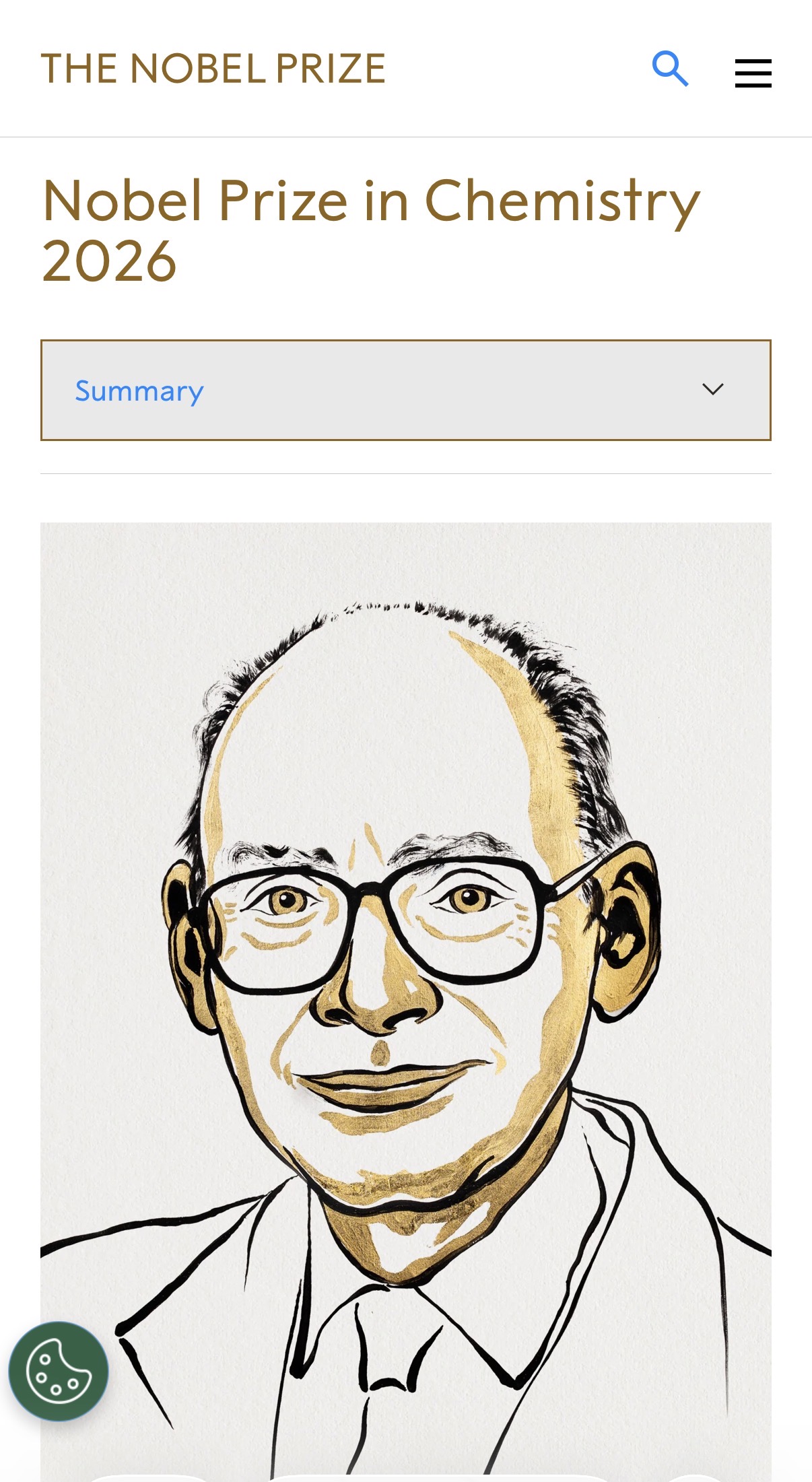
The Nobel Prize in Chemistry 2026 was awarded to Henri B. Kagan and Kenso Soai “for the discovery of non-linear effects and autocatalysis in asymmetric organic synthesis”.[1] It sounds highly technical, but its central question is close to one of chemistry’s big puzzles: why can molecules that look like mirror images produce very different results?
It is also a useful window into what students explore in Chemistry, Pharmaceutical Science, Materials Science, and Chemical Engineering.
Mirror molecules: similar, but not always interchangeable
Think of your left and right hands. They look similar, but you cannot place one perfectly on top of the other. In chemistry, some molecules occur in two mirror-image forms; these are called enantiomers. This property is linked to chirality.[2]
For chemistry involving living systems, the difference matters. Nobel Prize information explains that many drug molecules occur in two mirror-image forms; one may have the intended therapeutic effect, while the other can cause unnecessary and sometimes harmful side effects.[2]
What did Kagan and Soai contribute?
Kagan showed that in certain reactions, a small difference between the two mirror forms can be amplified beyond what chemists had previously expected. This phenomenon is known as non-linear effects.[2]
Soai then developed a reaction that demonstrated autocatalysis: a reaction product helps create more of the same product. In his experiment, a small excess of one molecular form could reinforce itself until it dominated the reaction outcome.[2]
Their work helps explain how chemistry can “choose” one mirror form. Nobel Prize information says the discoveries gave chemists important tools for designing reactions used in pharmaceutical manufacturing, flavours, scents, agricultural chemicals, and new materials.[2]
What might you study if this interests you?
Chemistry students commonly build foundations through:
- organic chemistry and molecular structure;
- stereochemistry, including chirality and enantiomers;
- analytical chemistry for measuring and identifying compounds;
- physical chemistry for understanding energy and reaction mechanisms; and
- laboratory skills, safety, and scientific reporting.
At a later stage, this interest can connect with Medicinal Chemistry, Pharmaceutical Science, Materials Science, Biochemistry, or Chemical Engineering. Programme options and course structures differ by university, so check the official curriculum before applying.
Skills you can start building at school
You do not need to understand every Nobel term before preparing for this pathway. Focus on the foundations:
- understand basic molecules, bonding, and reactions;
- practise accuracy when reading data and doing calculations;
- get comfortable explaining scientific processes in plain language;
- seek laboratory, science-club, or small-project experience where available; and
- build scientific English vocabulary, as many academic references and reports use it.
A Nobel Prize does not promise one particular career route. But Kagan and Soai’s story shows how a fundamental question about molecules can grow into tools that support real-world research and development.[2]
RIM Education can help you compare overseas Chemistry and Science study options and prepare your application documents. Contact RIM Education to discuss your plans.
Sources
[1] https://www.nobelprize.org/prizes/chemistry/2026/summary — Nobel Prize in Chemistry 2026 — NobelPrize.org
[2] https://www.nobelprize.org/prizes/chemistry/2026/popular-information — They solved chemistry’s asymmetric mystery — NobelPrize.org